


Double-hung windows are easy to recognize but not always easy to choose. Both the upper and lower sashes move vertically, giving homeowners more control over ventilation and making many models easier to clean from indoors. The trade-off is that frame material, glass configuration, weatherstripping and installation quality all influence how well the window actually performs.
This 2026 guide explains how double-hung windows work, how they differ from single-hung and casement windows, what common sizes and frame materials are available, what affects cost and energy performance, and when replacement may make sense. It also covers the performance information contractors and project buyers should review when specifying windows for new homes, apartments and other residential projects.
2026 review: Cost references, window-performance information and buying considerations in this guide have been reviewed for the current market and standards environment.
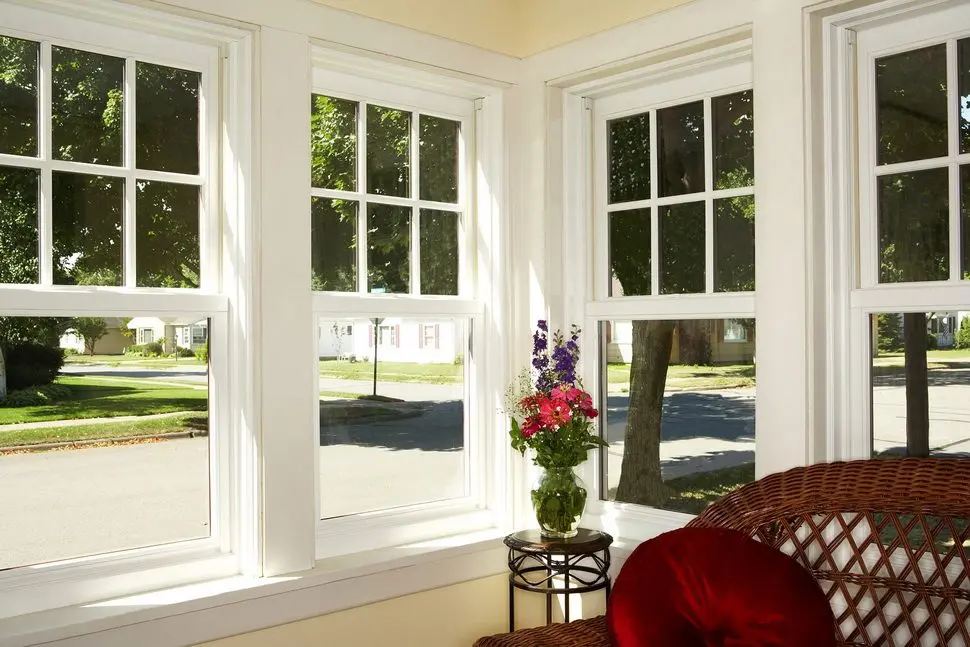
What Are Double-Hung Windows?
Have you ever noticed that some windows can only be opened from the bottom, while others let both sashes move? Replacement double-hung windows are a lot like single-hung windows, but there is one big difference.
A double-hung window consists of two operable sashes that slide vertically within the frame, offering flexible ventilation options unavailable in single-hung designs – a feature especially valuable in multi-story homes.
Why does this matter? Opening the upper sash can allow warmer indoor air to escape, while opening the lower sash can allow cooler outdoor air to enter when conditions are suitable.
Picture a house with two or three floors. To let hot air leave the house, you open the largest window sashes on the top levels. Ground level, you raise the lower sashes to let cooler air in. Opening both sashes can support natural air circulation when outdoor conditions are suitable: warmer indoor air may exit through the upper opening while cooler outdoor air enters below. Actual airflow depends on wind, indoor-outdoor temperature differences and the size of the open sash area.
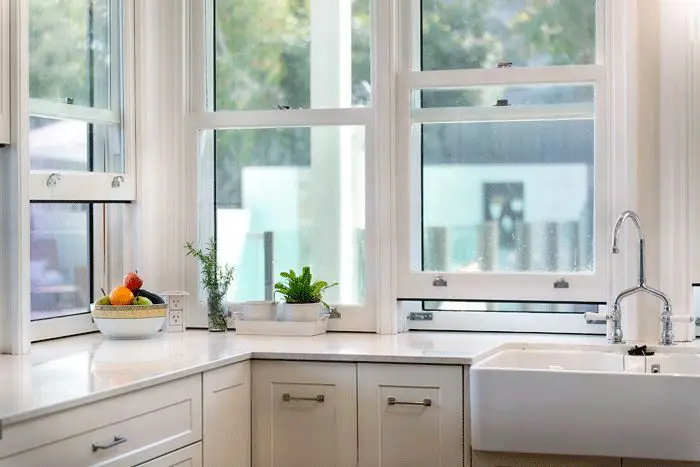
Key Components of Double-Hung Windows
- Lower sash: Typically opens upward for cool air intake
- Upper sash: Opens downward to release warm air
- Balance system: Hidden mechanisms that ensure smooth operation
- Meeting rail: Where sashes meet when closed
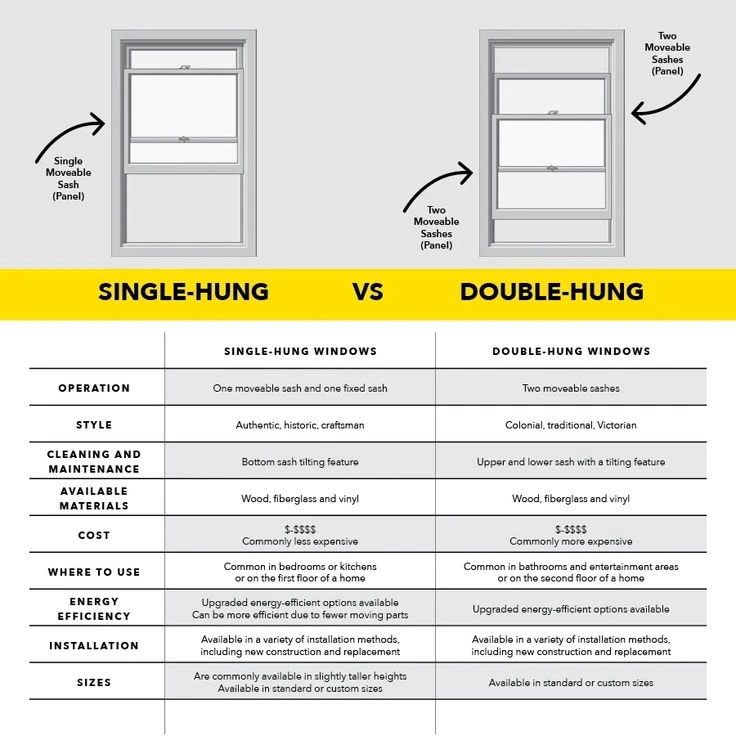
| Feature | Single-Hung | Double-Hung |
|---|---|---|
| Operable Sashes | 1 (bottom only) | 2 (both move) |
| Ventilation Control | Limited | Advanced |
| Cleaning Ease | Difficult | Easier (often tilts in) |
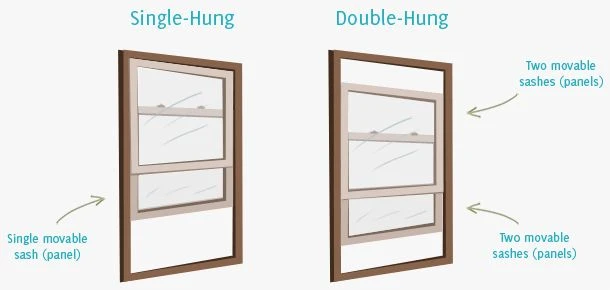
Double-Hung vs. Single-Hung Windows
Don't get fooled by similar-sounding terms! The terms "double window" and "double-hung window" refer to completely different things. Sometimes, mullions are used to connect the windows so that they look like they are all one piece. A double window can be made out of almost any type of window.
While "double window" simply means two window units installed side-by-side, "double-hung" describes the operating mechanism of a single window unit with two movable sashes.
More specifically, a double-hung window can be opened from both the top and bottom because both sashes are operable. For a wider window arrangement, two or more double-hung units can also be installed side by side and joined with mullions, depending on the design and structural requirements of the opening.
Common naming confusion stems from:
- Double glass panes (insulated glass units)
- Double window openings (two separate frames)
- Double-hung mechanism (two movable sashes)
Always check specifications carefully – what appears to be a "double window" might actually be a large double-hung unit or two separate single-hung windows.
When closed, single-hung and double-hung windows can look very similar. The practical difference is operation: a single-hung window normally has one movable lower sash and a fixed upper sash, while a double-hung window has two operable sashes. That extra movable sash gives double-hung windows more ventilation flexibility and can make exterior glass easier to reach from indoors on tilt-in models.
How Much Do Double-Hung Windows Cost?
Window shopping on a budget? Here's what to expect when calculating double-hung window costs for your house.
Double-hung window costs vary widely by market, frame material, glass package, size and installation conditions. Current U.S. pricing commonly ranges from several hundred dollars to more than $1,000 per installed window, with custom sizes, premium materials and complex replacement work increasing the final price.
Price Breakdown by Material
| Frame Material | Typical Price Position | Main Buying Consideration |
|---|---|---|
| Vinyl | Lower to mid-range | Low maintenance and widely available |
| Aluminum | Lower to mid-range | Slim profiles and strength; thermal-break design matters |
| Fiberglass | Mid to premium | Dimensional stability and low maintenance |
| Wood | Mid to premium | Traditional appearance and insulation, but higher maintenance |
Additional cost factors:
- Glass package: Low-E coatings, additional panes, laminated glass and other performance upgrades can increase the price.
- Custom sizing: Non-standard dimensions may cost more than standard-size products.
- Historic replication: Matching original profiles, sightlines, grille patterns or finishes can add design and manufacturing cost.
- Installation conditions: Full-frame replacement, damaged openings, difficult access and additional trim or flashing work can increase installed cost.
Pro Tip: ENERGY STAR-certified windows may qualify for rebates, tax incentives or other efficiency programs depending on location and current eligibility requirements. Check applicable local programs before purchasing.
4 Benefits of Double-Hung Windows
Double-hung windows are popular because their operating design combines flexible ventilation with convenient access to both sashes. Their actual energy performance, security and durability depend on the complete window system—including the frame, glazing, weatherstripping, locks and installation quality.
Here are four practical reasons homeowners continue to choose this window style.
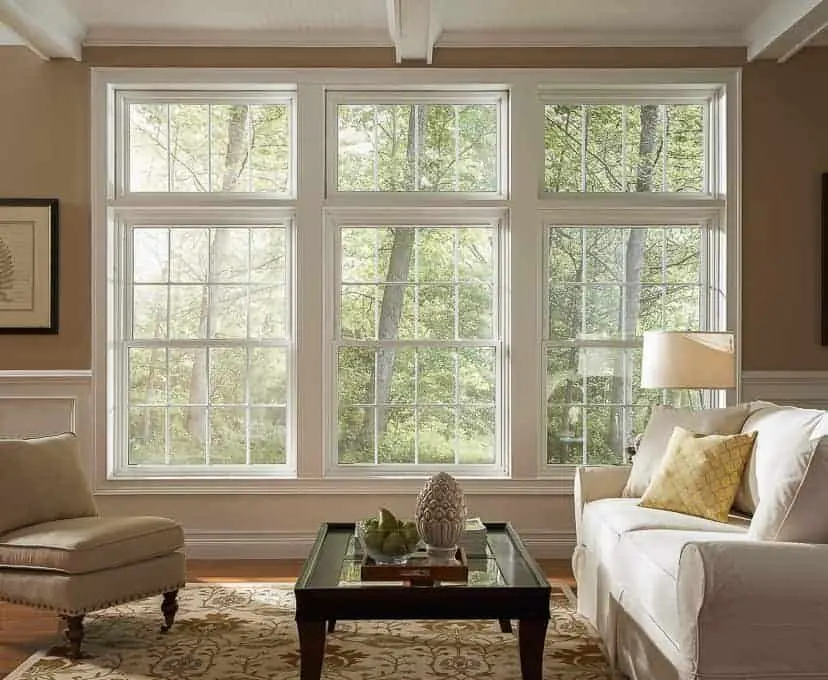
1. Energy-Efficient Glass Options
Double-hung windows can be configured with insulated glazing, Low-E coatings, gas fills and improved spacers to reduce heat transfer. The frame, sash seals and installation also affect overall performance, so buyers should compare the complete-window rating rather than judging efficiency by glass type alone.
- Low-E glass options
- Double- or triple-pane insulated glazing
- Argon or other gas-fill options
- Warm-edge spacer systems
- Improved weatherstripping and sash seals
2. Simple Cleaning
Many modern double-hung windows have tilt-in sashes that make exterior glass easier to clean from indoors, which can be particularly convenient for upper-floor windows.
- Many models allow both sashes to tilt inward for cleaning from inside
- Removable sashes in some models
- Easy-access track cleaning systems
3. Flexible Ventilation and Safety Options
Opening the upper sash can provide ventilation while keeping the lower sash closed, which may be useful in some family homes. However, an open window should not be treated as a fall-prevention device. Where child safety or fall protection is a concern, use appropriate window-opening control devices, guards or other measures required by local codes.
- Upper-sash ventilation while the lower sash remains closed
- Optional window-opening control devices or guards where required
- Locking and hardware options that vary by product and application
4. Traditional Style and Broad Design Compatibility
Double-hung windows suit a wide range of residential architecture, particularly traditional, Colonial, Craftsman and farmhouse-style homes. Frame colors, grille patterns and material choices can also adapt the basic vertical-sash form to more contemporary exterior designs.
Double-Hung vs. Other Window Types
Homeowners comparing different window types often consider double-hung, single-hung and casement windows based on cost, ventilation, cleaning access, air sealing and exterior clearance.
Single-hung windows can be a practical option when simpler operation and lower upfront cost are priorities, while casement windows are often considered when a wide opening and strong air-sealing potential are important.
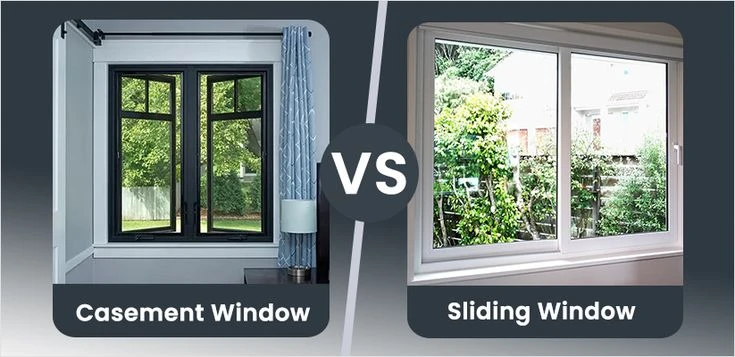
When to Pick Single-Hung Windows
- Lower upfront cost is a priority
- Only the lower sash needs to operate
- Exterior cleaning access is not a major concern
- A traditional single-hung configuration suits the project
When to Choose Casement Windows
- Strong air-sealing performance is a priority
- A wide outward opening is preferred
- Contemporary or traditional styling suits the project
- There is sufficient exterior clearance for the open sash
Comparative Table:
| Feature | Double-Hung | Single-Hung | Casement |
|---|---|---|---|
| Operable sashes | Two | One lower sash | One hinged sash |
| Ventilation control | Flexible top and bottom opening | Bottom opening only | Large outward opening |
| Interior cleaning access | Easy on many tilt-in models | More limited | Depends on design and location |
| Air-sealing potential | Depends heavily on sash seals | Generally fewer operable joints | Often strong due to compression sealing |
| Exterior projection | None | None | Requires exterior clearance |
| Typical style | Traditional to transitional | Traditional | Traditional to contemporary |
Double-Hung Window Sizes
Double-hung windows are available in many standard and custom sizes. Common residential products often fall within roughly 24–48 inches in width and 36–72 inches in height, but exact standard sizes vary by manufacturer and product series. For replacements, the existing opening and installation method matter more than choosing a size from a generic chart.
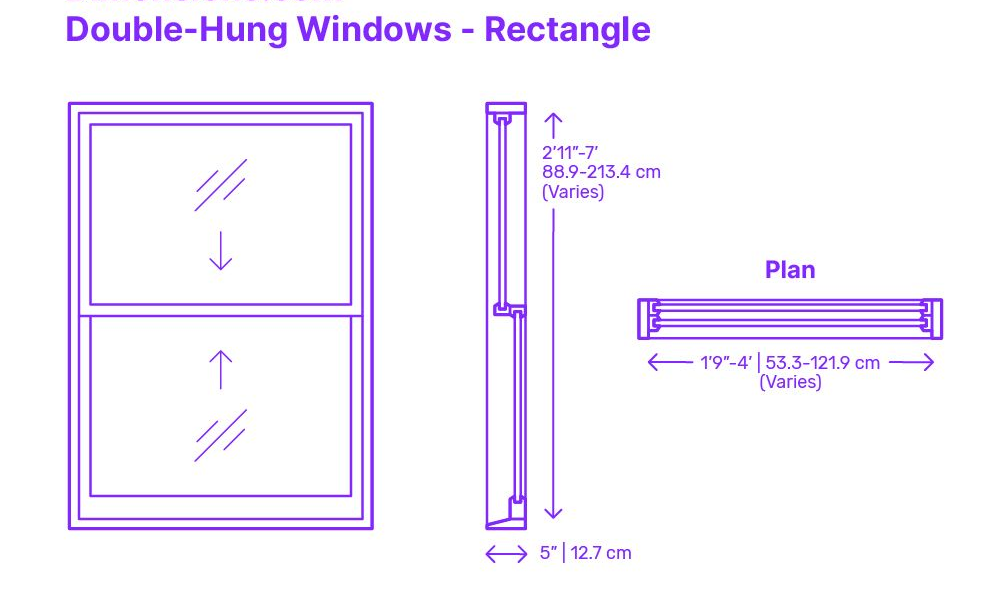
Standard Sizes
| Sizing Factor | What to Check |
|---|---|
| Width | Measure the existing opening and confirm the manufacturer's available sizes |
| Height | Confirm opening height and required installation clearances |
| Replacement type | Determine whether the project uses an insert/pocket or full-frame replacement |
| Room requirements | Check applicable ventilation, safety and egress requirements |
| Custom sizes | Confirm availability, tolerances and lead time with the manufacturer |
Measuring Tips:
- Record width at top/middle/bottom
- Record height at left/center/right
- Record the smallest measurements, but size the replacement window according to the selected manufacturer's instructions.
- Note exterior trim details
- Photograph window and label dimensions
For older or historic homes:
- Check whether the project requires custom sizing or replication of existing sightlines and profiles.
- Confirm whether a pocket/insert replacement or full-frame replacement is more appropriate.
- Verify custom-size lead times directly with the manufacturer before scheduling installation.
For broader rough-opening and sizing guidance, see our standard window sizes guide.
Frame Materials & Glass Options
Choosing a double-hung window involves more than selecting a frame material. Frame construction, glazing, sash seals, spacers, hardware and installation all influence thermal performance, durability, maintenance and operation.
Common frame materials include vinyl, wood, fiberglass and aluminum, while glazing options range from standard insulated glass to Low-E, laminated, tinted and other specialized glass packages. The best combination depends on climate, project requirements, budget and the whole-window performance ratings.
Double-hung window frames are commonly available in vinyl, wood, fiberglass and aluminum. Each material has different strengths, maintenance requirements and thermal-performance considerations:
Double-Hung Window Frame Types
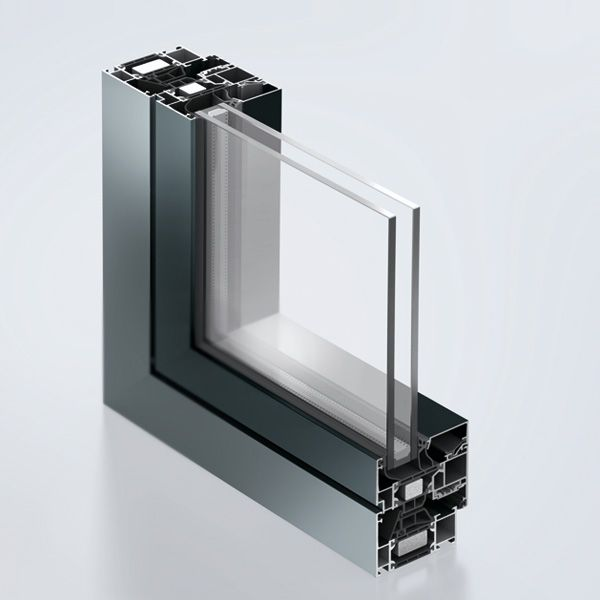
Vinyl double-hung windows:
- Pros: Low maintenance, generally cost-effective, good thermal-performance potential
- Cons: Color and finish options vary by product; lower-quality profiles may be more sensitive to heat and dimensional movement
Wood double-hung windows:
- Pros: Traditional appearance, good insulating properties, suitable for many historic-style applications
- Cons: Typically requires more maintenance and may be vulnerable to moisture-related deterioration if not properly protected
Fiberglass double-hung windows:
- Pros: Durable, low expansion, paintable
- Cons: Higher cost, fewer style options
Aluminum double-hung windows:
- Pros: Slim profiles, high strength, modern appearance
- Cons: Thermal performance depends heavily on frame design; non-thermally-broken frames can conduct more heat and may be more prone to interior-surface condensation in some conditions
Double vs Triple Pane: Which to Choose
Double-pane insulated glass is widely used because the sealed space between the panes reduces heat transfer compared with basic single-pane glazing. Triple-pane systems add another layer of glazing and insulating space, which can further reduce the window U-factor, but they also add weight and cost. The best choice depends on climate, frame design, whole-window ratings and project requirements.
The U.S. Department of Energy window guidance also recommends evaluating the complete window system—including the frame, glazing, gas fills, spacers and operating type—rather than choosing a window based on one component alone.
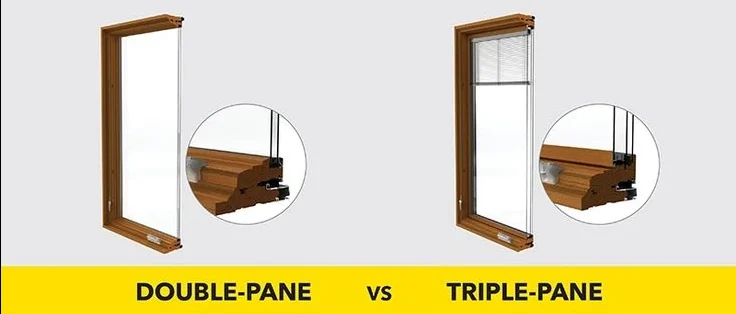
| Feature | Double-Pane | Triple-Pane |
|---|---|---|
| Glass layers | Two | Three |
| Insulating cavities | One | Two |
| Weight | Lower | Higher |
| Typical cost | Lower | Higher |
| Thermal-performance potential | Good with an appropriate Low-E/glass package | Higher potential in demanding climates |
| Best decision method | Compare whole-window ratings | Compare whole-window ratings |
The final choice should consider climate, whole-window performance targets, frame design, project requirements and budget rather than pane count alone.
Glass Type Options Explained
Glass selection affects thermal performance, solar heat gain, daylight, safety, security and privacy, but it should be evaluated as part of the complete window system. Depending on the window location and applicable building requirements, safety glazing such as tempered or laminated glass may be required. Low-E coatings, insulated glazing and other glass options can then be selected according to climate, orientation and project-performance goals.
- Low-E coatings (reflects infrared light)
- Tinted glass (reduces glare)
- Laminated glass (security/safety)
- Obscured glass (privacy)
Lock Styles for Security
Locking and opening-control hardware varies by window design and application. Common options for double-hung windows may include:
- Keyed locks for controlled access
- Window-opening control devices where required
- Vent locks for restricted opening
- Automatic or integrated sash-locking mechanisms
How to Read Double-Hung Window Performance Ratings
A double-hung window should not be judged by pane count or frame material alone. Two windows that look similar can perform differently because the glass package, frame, sash seals, spacers and overall construction work as a complete system.
When performance data is available, these ratings are more useful than generic labels such as “energy-efficient glass”:
U-Factor: Measures heat transfer through the complete window. Lower values generally indicate better insulating performance.
Solar Heat Gain Coefficient (SHGC): Indicates how much solar heat enters through the window. The appropriate value depends on climate, orientation and cooling or heating priorities.
Visible Transmittance (VT): Indicates how much visible daylight passes through the window.
Air Leakage (AL): Measures air movement through the window assembly. This is particularly relevant for operable windows because sash seals and weatherstripping affect infiltration.
Condensation Resistance: Indicates how well the product resists interior condensation under standardized conditions; higher ratings indicate greater resistance.
For contractors, developers and other project buyers, thermal ratings are only part of the specification. Where required by the project or local code, also confirm structural, water-penetration and air-performance requirements for the intended window size and installation condition.
Buyers comparing energy performance can use the NFRC window label to review standardized ratings such as U-Factor, SHGC, Visible Transmittance and Air Leakage.
For North American projects, specifiers should also confirm which fenestration standard and edition applies to the project. The 2026 North American Fenestration Standard (NAFS) has been published for windows, doors and skylights, making the applicable edition an important point to verify when preparing project specifications.
When Is It Time to Replace Double-Hung Windows?
A double-hung window does not need replacement simply because it is old. The better question is whether the frame, glass seals, sash operation and weather protection are still performing properly.
Common signs that deserve closer inspection include:
- Sashes that are difficult to open, close or keep in position
- Damaged balances, locks or weatherstripping
- Rot, corrosion, warping or other frame deterioration
- Persistent drafts around the closed sash
- Condensation or fogging between panes of an insulated glass unit
- Water staining or evidence of leakage around the opening
- Repeated repairs that no longer restore reliable operation
Some problems can be repaired without replacing the entire window, so inspect the cause before deciding between sash repair, glass replacement, insert replacement and full-frame replacement.
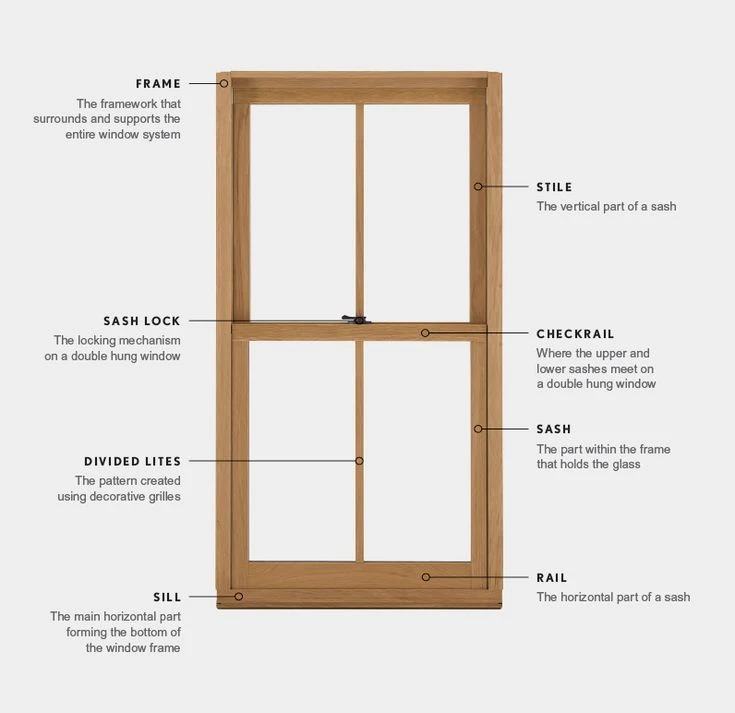
How to Replace Double-Hung Windows (DIY Guide)
Replacing a double-hung window can range from a relatively straightforward insert replacement to a full-frame installation involving flashing, exterior trim and water-management details. The correct method depends on the existing opening, window design, wall construction and manufacturer instructions.
The steps below provide a general overview rather than a universal installation specification. Always follow the installation instructions supplied with the selected window and applicable local building requirements. Full-frame replacements, damaged openings and upper-story installations may be better handled by an experienced installer.
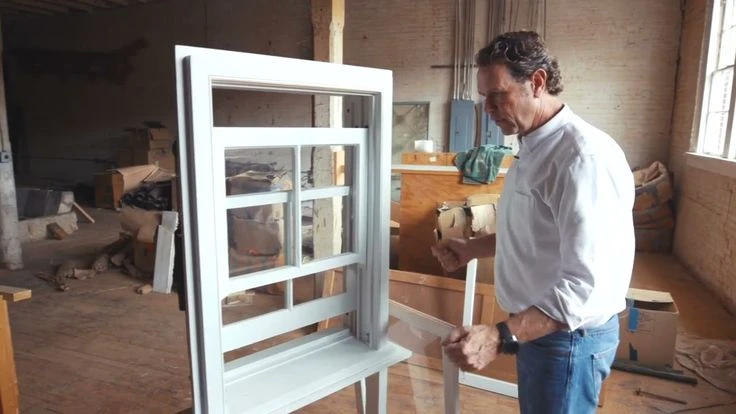
Step 1: Tools You'll Need for the Job
Before you remove or add anything, gather all the things you need in one place. You don't want to get halfway through the job and realize you're missing a tool.
Essential Toolkit:
- Tape measure
- Pry bars (large and small)
- Hammer
- Utility knife
- Caulk gun
- Level (24")
- Cordless drill/driver
- Shims (composite recommended)
- Insulating foam (low-expansion)
- Safety glasses & work gloves
Specialty Items:
- Zip tool for vinyl window removal
- Nail pick set
- Pocket window wrench
- Flashlight (for inspecting frame cavities)
Step 2: Measure the Existing Window Opening
Next, you'll need to measure to find out what size double-hung windows you need to replace the old ones. To start, remove the inner trim or casing to see the rough opening.
- Measure width at top/middle/bottom (use smallest dimension)
- Measure height at left/center/right (use shortest dimension)
- Record diagonal measurements to check for square
- Measure window depth (jamb to jamb)
- Note exterior brickmould/profile details
Critical: Do not apply a universal deduction to the rough-opening measurement. Required clearances vary by window type and manufacturer, so size the unit according to the selected product's installation instructions.
Step 3: Removing Your Old Window Safely
It's an important step in the process of changing double-hung windows. Be careful as you take it off; you don't want to damage the frame or the walls next to it.
- Remove interior stops carefully with pry bar
- Lower top sash completely, tilt bottom inward
- Release balance shoes/clips (varies by manufacturer)
- Remove parting beads from jambs
- Tilt out top sash
- Remove exterior stops if replacing full frame
- Inspect rough opening for damage
Safety First: Have helper stabilize large windows during removal
Step 4: Prepping the Window Opening
- Check that the sill and opening condition meet the selected window manufacturer's installation requirements.
- Verify stud condition (replace any rotted wood).
- Apply flashing tape to sill.
- Clean all debris from opening.
- Apply sill pan if required by code.
- Pre-drill nail holes in brickmould (if applicable).
Step 5: Dry Fit the New Double-Hung Window
Move the new window into the opening, but don't secure it yet. It lets you check for fit before making a choice.
- Place window in opening without fasteners.
- Check that perimeter clearances match the manufacturer's required installation tolerances.
- Verify operation of sashes.
- Confirm glass clarity (no defects).
- Mark shim locations where needed.
- Remove window and prepare sealant.
Critical: Operate window mechanisms before permanent installation
Step 6: Installing and Securing Your Window
The next stage in changing a double-hung window is correctly fastening the window.
- Apply sealant as specified for the selected window and installation method.
- Set window in opening (rest on sill).
- Place level across bottom rail.
- Place shims and fasteners only at the locations and spacing specified by the window manufacturer.
- Confirm plumb before fastening.
- Secure the window using the fasteners and fastening method specified by the manufacturer
- Recheck operation after each fastening.
Step 7: Sealing and Insulating the Frame
Effective insulation helps reduce drafts and uncontrolled heat loss.
- Use a window- and door-compatible low-expansion insulation product where required.
- Follow the insulation manufacturer's application, curing and trimming instructions.
- Avoid excessive foam pressure that could distort the window frame.
- Complete exterior flashing and sealant details according to the approved installation method.
Step 8: Finishing Touches and Trim Work
Complete the interior and exterior finishing details required for the selected window and installation method.
- Reinstall or complete interior and exterior trim as required.
- Finish perimeter sealant and flashing details according to the approved installation method.
- Touch up paint or finish on disturbed trim where necessary.
- Install the window screen, if included.
- Clean the frame and glass after installation.
- Check that weep openings or drainage paths remain unobstructed where applicable.
- Test both sashes, locks and any installed safety or opening-control devices.
Final check: Open, close and lock the window several times to confirm smooth operation, proper alignment and secure locking.
Are Window Screens Necessary?
Window screens are not required for every double-hung window, but they can be useful when the sashes are opened regularly for ventilation. Screens help limit insects and airborne debris while allowing outdoor air to pass through. Common options include fixed and retractable screens.
Flat screens: These are classic screens placed on the window's outside. They can be removed, but especially on higher stories, it might be a difficult chore.
Retractable screens: These screens roll or retract when not in use, preserving a clearer view while still allowing insect protection when the window is open. They typically cost more and include additional moving components compared with fixed screens.
Pros:
- Keep bugs out
- Allow fresh air
- Some provide UV protection
- Can be removed seasonally
Cons:
- Reduce visibility
- Require cleaning
- Can dent/damage
- May interfere with operation
Is a Double-Hung Window Right for Me?
Double-hung windows make the most sense when you value vertical ventilation, indoor cleaning access and a traditional sash-window appearance. They are particularly practical on upper floors where cleaning the exterior glass from outside would be inconvenient.
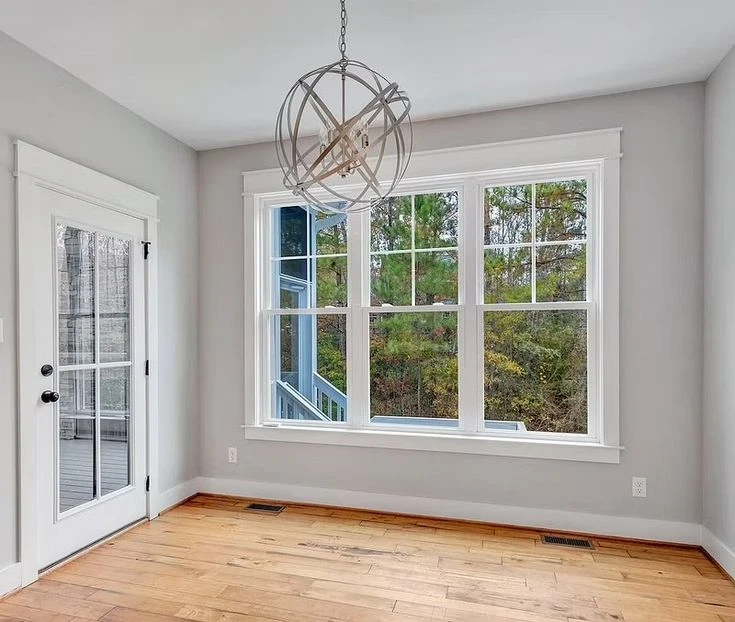
Consider a double-hung window when:
- You want both the upper and lower sash to operate
- Interior tilt-in cleaning is important
- The window must not project into a walkway, patio or exterior path
- Traditional or transitional architecture suits the project
- Flexible top-sash ventilation is useful
Consider another window type when:
- Maximum air-sealing performance is the highest priority
- You want a wide, unobstructed opening from a single sash
- The operating hardware must be easier to reach from a seated position
- A very large uninterrupted glass area is more important than traditional sash proportions
The final decision should be based on climate, opening location, accessibility, architecture and tested performance rather than window style alone.
Conclusion
Double-hung windows remain a practical choice when two operable sashes, controlled ventilation and indoor cleaning access matter more than maximum sash compression. But the operating style is only one part of the decision: frame construction, glazing, whole-window ratings, installation and local climate ultimately determine performance.
For a single-home replacement, start with the opening condition, required size and the performance ratings appropriate for your climate. For new-build, villa or multi-unit projects, define the required window sizes, glass configuration, thermal and weather-performance criteria before comparing product proposals.
If you are planning a residential or project window package, explore our custom windows and doors or send George Group your drawings or window schedule. Our team can help review window configurations, glass options and project requirements before quotation.
Recommended Reading: Top 10 Window and Door Manufacturers in China (2026)
Double-Hung Window FAQs
Yes. A true double-hung window has an operable upper sash and an operable lower sash. This is the main difference from a single-hung window, where the upper sash is normally fixed.
Not automatically, but their operating design can make air sealing more challenging. Casement windows typically close against compression seals, while double-hung sashes slide within the frame. Compare the tested whole-window U-Factor and Air Leakage ratings rather than assuming performance from window style alone.
Many modern double-hung windows have tilt-in sashes that allow both sides of the glass to be cleaned from indoors. The exact tilt or removal mechanism varies by product, so follow the manufacturer's operating instructions.
There is no single U-Factor that is best for every project. Climate, local energy requirements, frame construction and glass configuration all affect the appropriate target. Compare NFRC-rated whole-window performance and any requirements that apply in your location.
They can be particularly convenient on upper floors because many models allow the exterior glass surfaces to be accessed from indoors for cleaning. Upper-sash ventilation is another benefit, but fall protection and opening-control requirements should still be considered where applicable.
Yes. Manufacturers may offer custom dimensions, frame colors, grille patterns, glazing packages, screens and hardware options. For larger projects, confirm the required sizes and performance criteria before finalizing the window schedule and production drawings.


